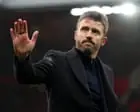
Clubs Managed by Jose Mourinho
Jose Mourinho's career can be understood through the clubs that hired him and the problems they wanted him to solve. Some needed a winner. Some needed authority. Some needed European credibility. Others wanted a manager capable of changing standards immediately. Mourinho's record is not identical at every club, but each job explains a different part of his football identity.
Benfica: A Short First Test
Mourinho's Benfica spell was brief, but it mattered because it moved him from assistant and interpreter roles into the pressure of senior management. Benfica is a demanding club with a large supporter base and constant scrutiny. Even in a short stay, Mourinho showed confidence, independence and a willingness to challenge decisions above him.
The Benfica period is often treated as a footnote, but it introduced themes that later became familiar: Mourinho wanted authority, clarity and a direct line between his work and the team's standards.
Uniao de Leiria: Building Credibility
Uniao de Leiria gave Mourinho a more stable platform to show coaching ability. Without the same global attention as Benfica, he could focus on organisation and results. The work there helped convince bigger clubs that Mourinho was not only a strong communicator but also a coach capable of improving a team quickly.
Porto: From Domestic Force to European Champion
Porto changed everything. Mourinho inherited a major Portuguese club and turned it into a European champion. The team won domestically and then conquered Europe through discipline, transition speed and tactical belief. Porto remains the purest example of Mourinho as a builder and winner at the same time.
The 2004 Champions League win made him one of the most wanted managers in football. It also gave him credibility that followed him into every later dressing room. Mourinho could point to a team that had beaten the odds because it trusted his method completely.
Chelsea: Creating a Premier League Power
Chelsea gave Mourinho money, ambition and a league ready for disruption. He gave Chelsea identity. His first team was physically strong, defensively elite and psychologically confident. Players such as John Terry, Frank Lampard, Didier Drogba, Claude Makelele and Petr Cech became associated with a period of control and authority.
Mourinho's second Chelsea spell had a different tone but still brought another Premier League title. Together, the two spells made Chelsea the club most closely associated with Mourinho in English football.
Inter Milan: The Complete Mourinho Team
Inter Milan may be the club where Mourinho's method reached its highest expression. The 2010 treble-winning side combined senior leadership, tactical sacrifice and elite game management. Inter could attack directly, defend deep, control emotional pressure and execute a plan over two legs.
The emotional connection between Mourinho and Inter supporters remains strong because the success felt historic. It was not only a winning season; it was a season that reshaped the club's modern identity.
Real Madrid: Pressure, Rivalry and Speed
Real Madrid hired Mourinho to challenge Barcelona and restore competitive edge. The job came with politics, pressure and the highest expectations in club football. Mourinho's Madrid became one of the fastest attacking teams in Europe, using transitions and vertical passing to devastating effect.
Winning La Liga against peak Barcelona was a major achievement. The period also had conflict, but it left Madrid more intense, more demanding and more prepared for later European success.
Manchester United: Winning During Instability
Manchester United offered a different challenge. The club was still trying to define itself after Sir Alex Ferguson. Mourinho won trophies, including the Europa League, but his spell was marked by tension around recruitment, playing style and long-term direction.
The United period is often judged harshly, but it also shows Mourinho's ability to win even in imperfect conditions. The Europa League final victory gave United a European trophy and a route back into the Champions League.
Tottenham Hotspur: The Unfinished Chapter
Tottenham was the most visibly unfinished Mourinho job. He arrived at a club with talent but also structural challenges. The team reached a cup final, but Mourinho was dismissed before it was played. That ending shaped how many supporters remember the spell.
Even so, Tottenham fits a broader pattern: Mourinho was hired to convert a nearly team into a winning team. The fact that it did not happen shows the limits of managerial influence when club timing, squad balance and internal expectations are misaligned.
Roma: Rebuilding Connection
Roma restored part of Mourinho's emotional connection with supporters. The Europa Conference League win was historically important for the club and gave Mourinho another European trophy. Roma fans responded to the sense that he understood the club's hunger for a defining moment.
The spell also showed that Mourinho remained a dangerous knockout manager. Even when league results were inconsistent, Roma could compete in Europe through concentration, structure and emotional intensity.
Fenerbahce and the Later Career
Fenerbahce represents the later Mourinho: a manager whose profile still transforms attention around a club, but who works in a football world that has changed tactically, financially and politically. His later jobs are watched not only for trophies, but for what they say about how elite managers adapt.
FAQ
Which club made Jose Mourinho famous?
Porto made Mourinho famous across Europe. Winning the UEFA Cup and then the Champions League with Porto turned him from an emerging Portuguese coach into an elite managerial name.
Which English clubs has Mourinho managed?
Mourinho has managed Chelsea, Manchester United and Tottenham Hotspur in England. His most successful English period came at Chelsea, where he won multiple Premier League titles.
Which Italian clubs has Mourinho managed?
Mourinho has managed Inter Milan and Roma in Italy. He won the treble with Inter in 2010 and later won the Europa Conference League with Roma.
Did Mourinho manage Real Madrid?
Yes. Mourinho managed Real Madrid from 2010 to 2013, winning La Liga, the Copa del Rey and the Supercopa de Espana during a period dominated by the rivalry with Barcelona.
Related pages: Jose Mourinho profile, Mourinho trophies, Premier League hub and Serie A hub.