Uncategorized
South Korea’s National Team in Turmoil as Son Heung-min’s Leadership Faces Scrutiny
South Korea's football team confronts internal strife and leadership challenges after a poor World Cup showing, with captain Son Heung-min’s position under question and team cohesion at risk.
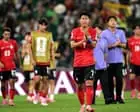
South Korea’s national football team is currently mired in internal conflict that has raised serious concerns about team unity and leadership. The crisis escalated after a disappointing World Cup performance, with tensions between younger and older players becoming increasingly apparent and the captain Son Heung-min’s standing within the squad coming under scrutiny.
The issue gained public attention on 21 October when politician Jeong Yeon-wook questioned acting Korea Football Association (KFA) president Lee Yong-soo during a parliamentary committee meeting. Jeong highlighted unsettling reports that some players have stopped referring to Son Heung-min by name, instead calling him dismissively “No 7” or “that person.” When asked if this referred to Son, Lee confirmed the implication but declined further comment.
Son Heung-min, widely regarded as one of Asia’s greatest football talents and a respected Premier League star, has traditionally been a unifying figure for the team. However, the revealed discord suggests his leadership role is now contested within the squad. This reflects a broader divide between the team’s younger and older members, indicating deeper issues with squad cohesion and management.
The parliamentary inquiry underscored how the team’s internal struggles have transcended sports and become a matter of national concern. The leadership breakdown reportedly disrupts team harmony and has contributed to the poor performances witnessed during the World Cup, raising questions about the future direction of South Korean football.
This turmoil threatens to undermine South Korea’s preparations for forthcoming international fixtures. With the captain’s authority questioned and player relationships strained, the team risks further instability. Such conditions could affect tactical consistency and overall morale, critical factors for a squad aiming to recover and compete effectively on the world stage.
Moving forward, the Korea Football Association faces the urgent task of addressing these internal divisions and restoring clear leadership. Ensuring unity within the squad will be essential as South Korea seeks to rebuild its reputation and performance ahead of upcoming tournaments.